


LVDT Displacement Sensor Wiring and Connection Methods
An LVDT displacement sensor (Linear Variable Differential Transformer) is widely used for high-accuracy linear position measurement in industrial automation, testing equipment, and precision manufacturing.
Shenzhen Soway Tech Limited (Soway) designs and manufactures a complete range of LVDT displacement sensors with integrated electronics, supporting multiple output signal options for different control systems and installation environments.
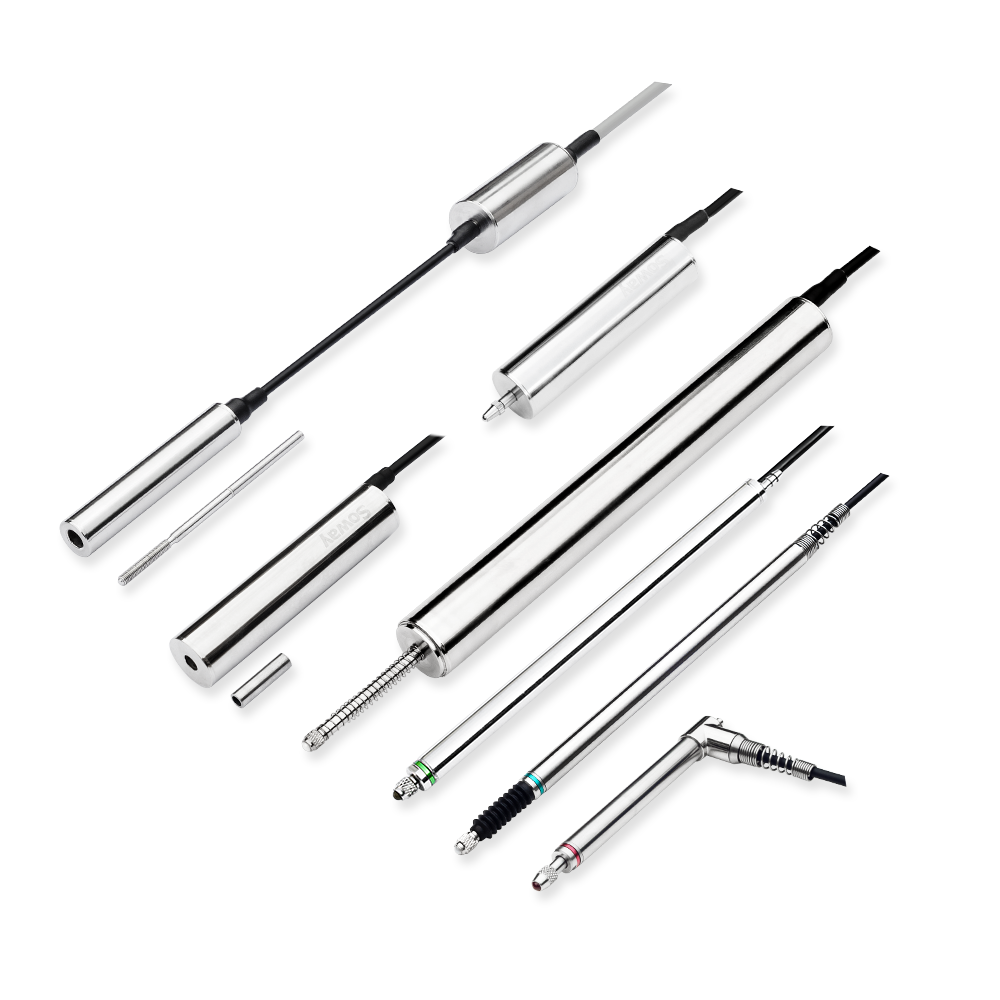
Soway LVDT Displacement Sensor Outputs
Soway LVDT displacement sensors are available with built-in signal conditioning, allowing direct connection to PLCs, controllers, and data acquisition systems.
Common output options include:
Analog voltage output (0–5 V, 0–10 V)
Analog current output (4–20 mA)
Digital signal output (RS-485)
These output options are designed to maintain measurement accuracy while improving compatibility with industrial control and monitoring systems.
1. Analog Voltage Output Connection
Analog voltage output is a widely used connection option for an LVDT displacement sensor, especially in systems equipped with standard analog input modules.
The sensor provides a linear voltage signal corresponding to the measured displacement. This output can be connected directly to compatible analog voltage inputs of PLCs, motion controllers, or data acquisition devices.
Key characteristics
Simple system integration
Fast signal response
Suitable for short to medium cable distances
Typical usage scenarios
Automation equipment
Measurement and testing systems
Precision positioning applications
This output type is commonly selected when voltage input is supported by the control system and environmental interference is limited.
2. Analog Current Output (4–20 mA)
For applications requiring stable signal transmission over longer distances, Soway offers 4–20 mA output LVDT displacement sensors.
The current signal represents the displacement position and can be read by standard current input modules in industrial controllers.
Key characteristics
Strong resistance to electrical noise
Stable transmission over long cable runs
Suitable for demanding industrial environments
Typical usage scenarios
Industrial machinery
Production equipment
On-site measurement and monitoring systems
The 4–20 mA output is commonly used in applications where signal stability and reliability are critical.
3. Digital Output Connection (RS-485)
Soway LVDT displacement sensors are also available with RS-485 digital output, enabling digital transmission of displacement data to control or monitoring systems.
This output option is suitable for applications where digital communication is preferred for data acquisition or system integration.
Key characteristics
Digital signal transmission with strong anti-interference capability
Suitable for multi-device system integration
Supports centralized data collection
Typical usage scenarios
Automated production lines
Multi-sensor measurement systems
Industrial control and monitoring platforms
Digital output reduces the influence of analog signal interference and supports flexible system architectures.
Soway LVDT displacement sensors support multiple output signal options, including analog voltage, analog current, and digital communication.
By selecting the appropriate output type, users can integrate the sensor efficiently into different industrial measurement and control systems while maintaining accuracy and stability.
Understanding the available connection methods of an LVDT displacement sensor helps ensure reliable operation across a wide range of industrial applications.


