


LVDT Displacement Sensor: Composition and Working Mechanism
An LVDT displacement sensor (Linear Variable Differential Transformer) is a highly reliable inductive device used for precise linear position measurement. Shenzhen Soway Tech Limited (Soway) designs and manufactures LVDT displacement sensors based on a proven electromagnetic principle that ensures stable, repeatable, and contactless measurement performance.
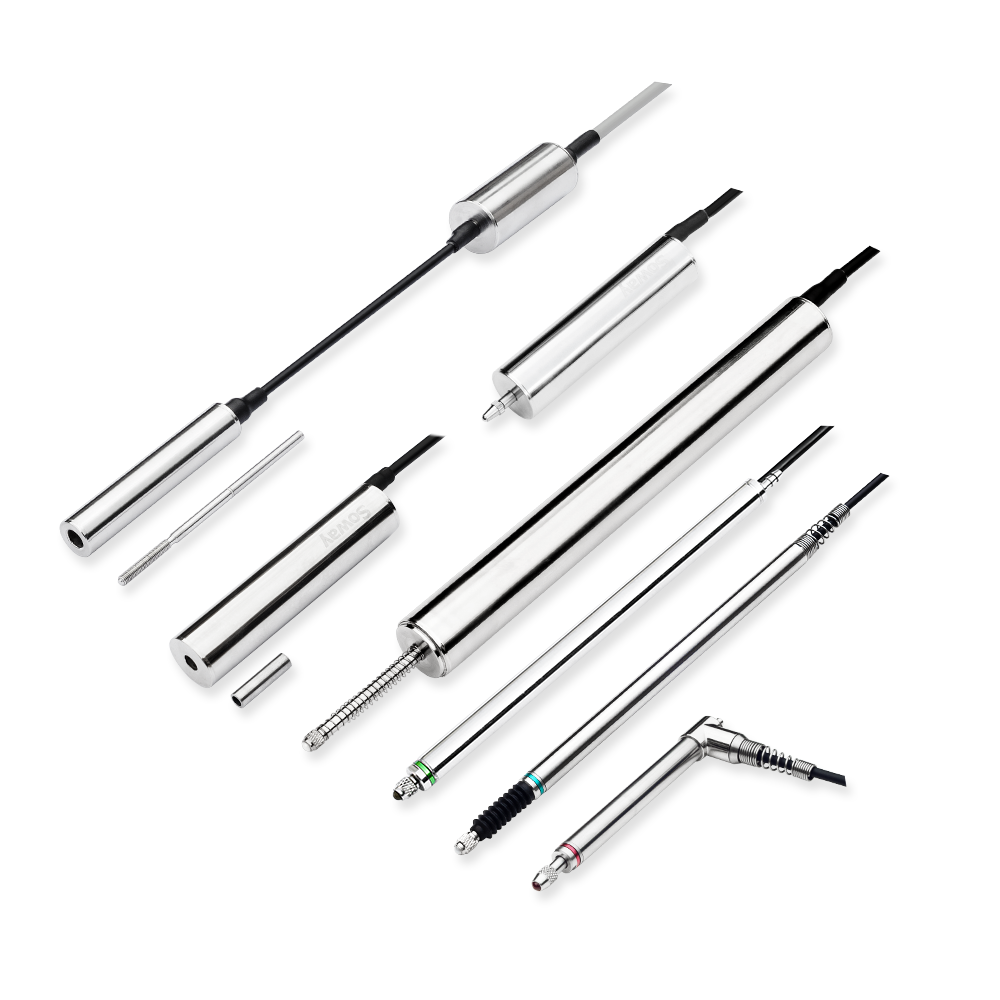
Core Components of an LVDT Displacement Sensor
The structure of an LVDT displacement sensor is simple yet extremely effective. It consists of three fundamental elements:
One Primary Coil
Positioned at the center of the sensor body, the primary coil is energized by an external AC excitation signal.
Two Secondary Coils
These coils are symmetrically wound on either side of the primary coil and are electrically connected in series opposition.
Movable Ferromagnetic Core
A soft iron core moves freely inside the coil assembly without mechanical contact, directly following the measured linear displacement.
Soway’s LVDT displacement sensor design eliminates mechanical friction between the sensing elements, ensuring long service life and consistent signal output.
Working Mechanism of the LVDT Displacement Sensor
The operating principle of an LVDT displacement sensor is based on electromagnetic induction and differential voltage output.
AC Excitation and Magnetic Flux Generation
When an alternating current is applied to the primary coil, it generates an alternating magnetic flux along the sensor’s axial direction.
Induced Voltage in Secondary Coils
This magnetic flux induces voltages in both secondary coils. The magnitude of each induced voltage depends on the coupling strength between the primary coil and the secondary coils.
Core Position Dependency
As the ferromagnetic core moves within the coil assembly, the magnetic coupling changes:
When the core is centered, the induced voltages in both secondary coils are equal, resulting in a zero differential output.
When the core moves toward one secondary coil, the induced voltage in that coil increases while the voltage in the opposite coil decreases.
Differential Output Signal
The output voltage is the difference between the two secondary coil voltages. This differential signal is directly proportional to the core’s displacement and indicates both the magnitude and direction of movement.
Soway’s LVDT displacement sensor converts this differential AC signal into a stable, usable output through precise internal signal conditioning.
Measurement Characteristics
Because the LVDT displacement sensor operates without physical contact between the core and coils, its measurement is:
Highly linear within the rated stroke
Free from mechanical wear
Resistant to vibration and environmental interference
Stable over long-term operation
Shenzhen Soway Tech Limited applies optimized coil geometry and magnetic design to ensure accurate correlation between core position and induced secondary voltage.


