


Temperature Effects on LVDT Displacement Sensor Output
Temperature variation is an important factor influencing the performance of an LVDT displacement sensor (Linear Variable Differential Transformer). Shenzhen Soway Tech Limited (Soway) designs its LVDT displacement sensors based on a deep understanding of electromagnetic behavior under thermal change, ensuring stable and reliable output across the specified operating temperature range.
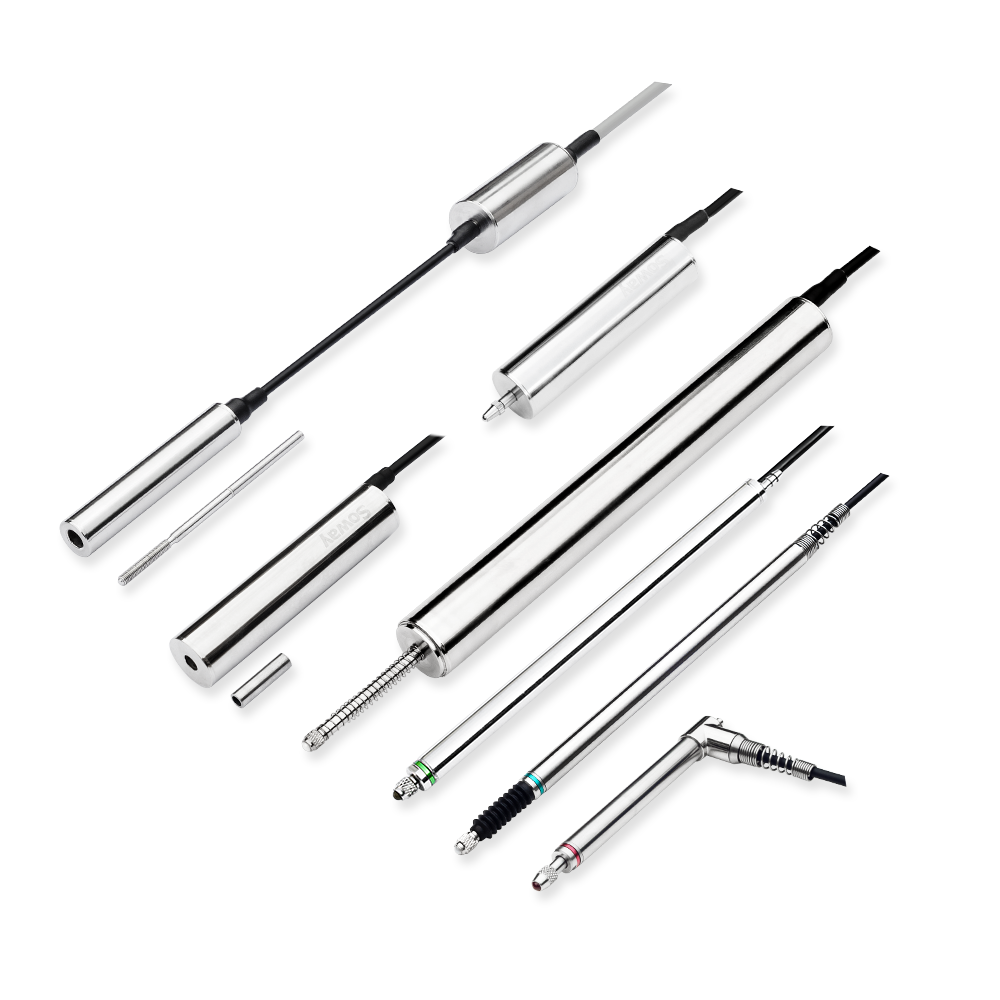
According to Soway’s product specifications, standard LVDT displacement sensors are designed to operate reliably within a temperature range of −25 °C to +85 °C, with well-controlled temperature coefficients for both sensitivity and zero output.
Relationship Between Temperature and LVDT Output
An LVDT displacement sensor operates through AC excitation and electromagnetic induction. Temperature changes affect electrical and magnetic characteristics of the sensor, which in turn influence the output signal. These temperature-related effects are mainly reflected in sensitivity drift and zero drift.
Sensitivity Drift
Sensitivity drift refers to a change in the proportional relationship between displacement and output voltage as temperature varies.
In an LVDT displacement sensor, temperature changes can influence:
Electrical resistance of the primary and secondary coils
Magnetic permeability of the ferromagnetic core
Electromagnetic coupling efficiency between the coils and the core
As temperature changes within the operating range, these factors may cause slight variation in output voltage per unit displacement. Shenzhen Soway Tech Limited minimizes sensitivity drift through optimized coil design, stable excitation control, and precision signal conditioning, ensuring consistent measurement performance.
Zero Drift
Zero drift describes a shift in the baseline output signal when the movable core is at the null (center) position.
Temperature variation may lead to:
Unequal resistance changes between the two secondary coils
Minor imbalance in magnetic coupling
Offset changes in internal electronic circuits
These effects can result in a small output offset even without displacement. Soway’s LVDT displacement sensor design uses symmetrical coil structures and temperature-stable electronic components to reduce zero drift and maintain output accuracy.
Thermal Stability Design Considerations
To ensure stable output under temperature variation, Shenzhen Soway Tech Limited applies the following design principles in its LVDT displacement sensors:
Coil materials with low temperature coefficients
Optimized magnetic core materials for stable permeability
Precision signal conditioning circuits with temperature compensation
Mechanical structures that minimize thermal stress effects
These measures ensure that the relationship between core position and output voltage remains accurate throughout the specified temperature range.
Temperature changes affect the output of an LVDT displacement sensor primarily through sensitivity drift and zero drift. By applying optimized electromagnetic design and temperature compensation techniques, Shenzhen Soway Tech Limited ensures that its LVDT displacement sensors deliver stable, repeatable output performance within their rated operating temperature range.


